July 29, 2026
Best Way to Get a Funded PhD Without a Scholarship
The professor-funded assistantship route, compared honestly against institutional packages and self-funding, plus how to actually run the outreach.
Most guides on funding a PhD default to the same advice: apply to a handful of famous named scholarships (Chevening, Fulbright, Gates Cambridge), or look for university programmes that advertise full funding as a package deal. Both are real options. Neither is the route that actually funds most PhD students. The guides that mention the real route usually bury it as one line item instead of the main answer.
The 3 real routes, compared honestly
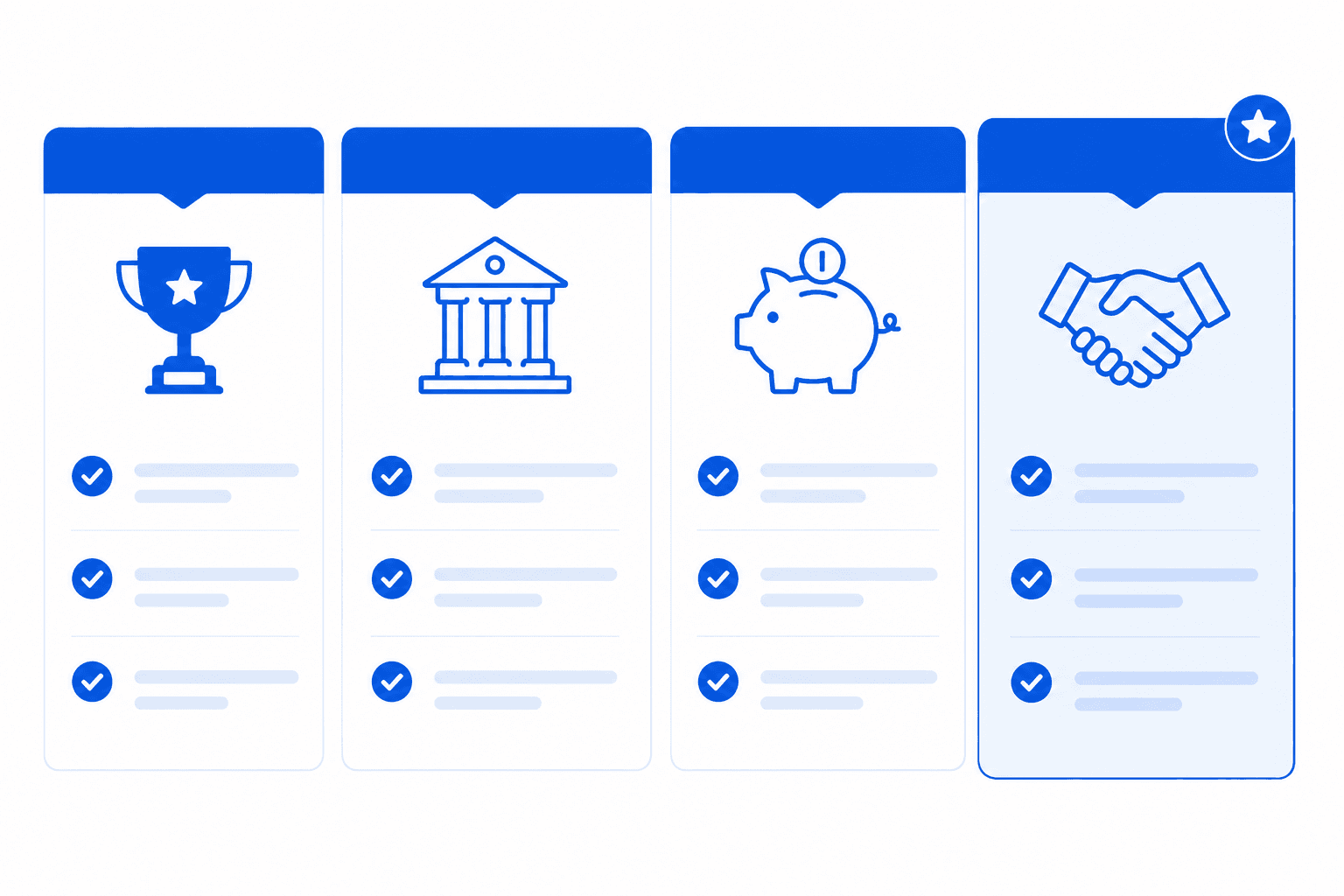
- Named external scholarships. Chevening, Fulbright, Gates Cambridge, and similar: a few dozen to a few hundred spots globally, competing against tens of thousands of applicants. Worth applying to, not worth depending on. See how to actually apply for one if you're running this route in parallel.
- Institutional full-funding packages. Some universities guarantee tuition + stipend for every PhD admit in a given department (a real, legitimate route; some strong US programmes work this way). The gap: this depends entirely on which universities and departments you already know to target, and it's a passive strategy: you apply broadly and hope the guarantee applies to you, rather than actively securing it.
- Self-funding. Savings, small grants stacked together, side income, family support. A real, sometimes necessary path, but a hard one, and not something to plan around if a more reliable route exists.
- Professor-funded assistantship (the one this post is actually about). A professor with grant or assistantship money decides to fund you directly (as a Research Assistant, Teaching Assistant, or Graduate Assistant) because they want you on their team. In most PhD funding systems, especially in the US, this is genuinely the default way serious admits get funded, not a rare exception. It just requires actively finding and reaching the right professor instead of waiting for a scholarship committee or a university brochure.
The funding follows the professor, not the portal. Your job is to make one professor with grant money want you on their team: everything else is paperwork around that single yes.
Why this route actually works
Popular professors get somewhere between 100 and 200 cold emails a month and decide whether to reply in about four seconds. That sounds discouraging until you look at the real ratio: one widely-shared account describes sending over 360 personalised emails, doing about 20 interviews, and landing 3 funded offers. That's not a story about being exceptional. It's a story about volume and personalisation: reaching enough of the right professors, with an email specific enough to prove you read their actual work, and following up instead of giving up after silence.
How to actually run this route
1. Find professors with grant money, not just any professor
A professor in your field isn't automatically a funding source: you need someone actively publishing, with a live research budget, currently taking students. Filtering for that before you spend an email on someone is exactly what a professor search tool does that a generic department directory doesn't.
2. Write an email that proves fit, not one that asks for money
The first email's job is to prove you understand their specific research, not to ask "do you have funding for me?" A professor who gets a funding question in line one reads it as "another applicant who just wants money." A professor who gets a sharp, specific note about their actual work reads it as a potential colleague. Funding almost always comes up naturally once they're interested.
3. Follow up: most yeses come from the second email, not the first
Silence usually means the first email got buried, not that the answer is no. A polite follow-up after 2-3 weeks is where most of the eventual replies actually come from.
4. Run this in parallel with the other 3 routes, not instead of them
This isn't an either/or against named scholarships or full-funding programmes: it's the route to run at the same time, since it has better odds and depends far less on being one of a small number of global winners.
Common questions
Is self-funding a better option if I can manage it?
Self-funding gives you independence and control over your research direction, which matters to some people. But it's genuinely harder, and it's not necessary as a first resort: the professor-funded route can get you a real stipend without needing savings, side income, or family support to carry you through.
How is this different from just applying to a fully-funded programme?
Fully-funded institutional programmes are real and worth applying to, but they're a fixed list: you're limited to whichever departments already guarantee funding for everyone. Professor outreach works at any university, funded-guarantee or not, because you're securing money from a specific person's grant, not a blanket departmental policy.
What if a professor says they have no funding this cycle?
This happens even with a strong fit. Funding availability shifts month to month, and no external tool or guide can see it in advance. It's exactly why volume matters: one "no funding this cycle" reply doesn't sink your outreach if you've reached enough of the right people.
Where to start
If you already know your research area, the fastest way to run this route is finding professors who are actively publishing (the closest available signal to still being funded and taking students, since no tool can confirm funding availability directly), then generating an email grounded in their real work instead of a generic template. Try the professor search tool free: your first 2 credits (one professor match, one generated email) cost nothing.
Related reading
- Self-Funded vs. Funded PhD: Is It Worth It? (2026)
- Best Tools to Find Professors for PhD (2026)
- How to Email a Professor for PhD Funding
- Fully Funded PhD in USA Without GRE (2026)
- Research Supervisor Search Tool for a Funded PhD (2026)
- How to Negotiate a PhD Funding Offer (2026)
- Difference Between RA, TA, and GA Funding Explained (2026)
- How to Find a PhD Supervisor in Germany (and Get Funded)
- How to Get a Scholarship to Study Abroad for a Masters or PhD (2026)
Stop writing these one at a time.
GradScoutFunding finds the professors, researches their actual papers, and writes the personalised email above: for a hundred professors, not one. Your first 2 credits are free.
Find my first professor, free